
 9985 Folsom Blvd, Sacramento CA 95827
 (866) 303-6275
Question About Treatment

Understanding Severity in Addiction & Mental Health: When It’s a 911 or a 411 Situation
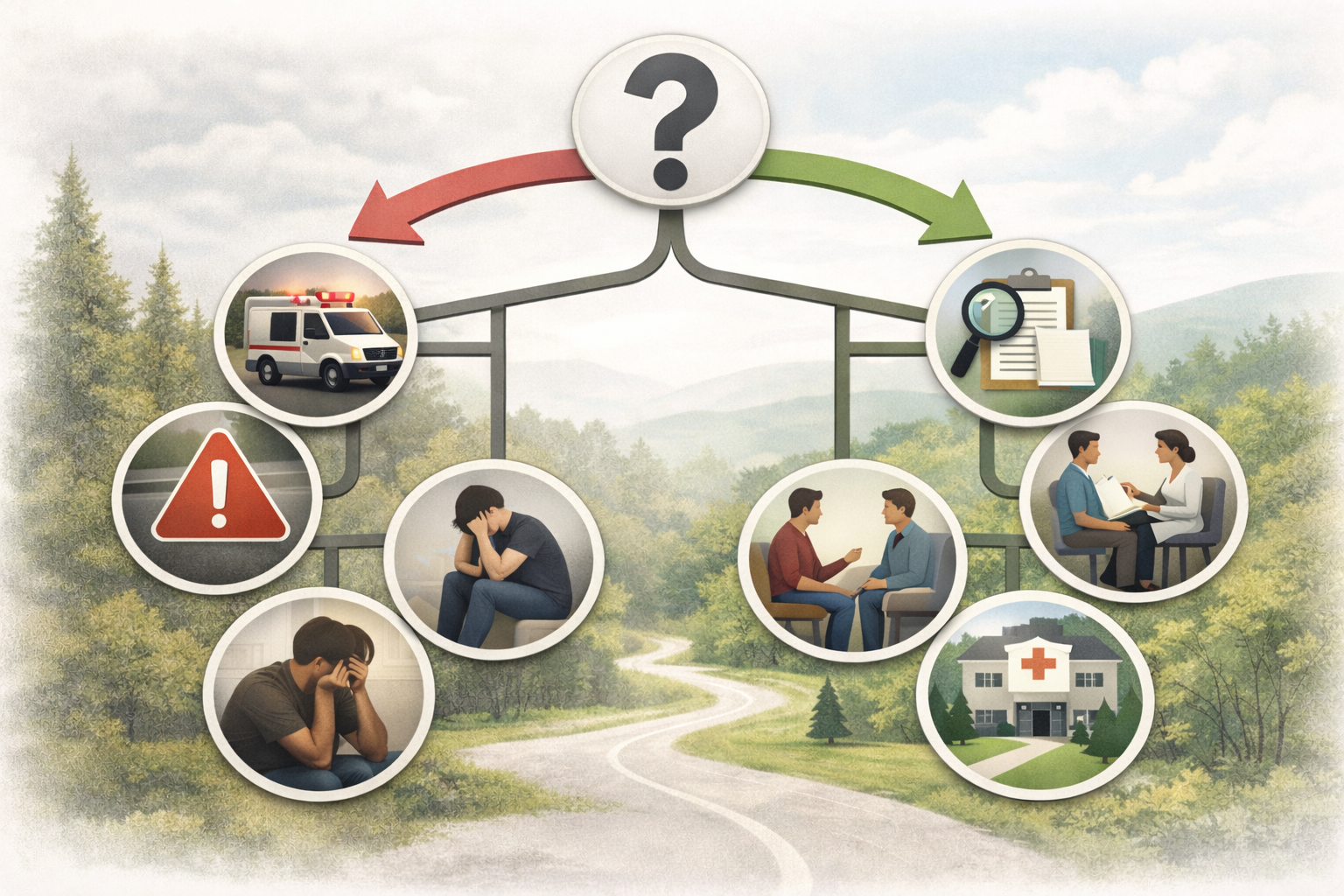
When someone you love may be struggling with addiction or mental health challenges, it can be confusing and frightening. You might find yourself asking: Is this an emergency? Should I call 911? Or do I need to learn more before acting? Knowing how to respond can make the difference between safety and crisis escalation.
This article helps guide loved ones through recognizing 911 vs. 411 situations — how to tell when immediate help is needed and when it’s time to seek professional assessment or treatment information. You’ll also learn key acronyms used in treatment settings, how to evaluate risk, where to find support groups, critical helplines, and steps you can take right now to help your loved one and yourself.
The idea of 911 vs. 411 is a practical way to think about severity:
- 911 situations are immediate emergencies — life-threatening, requiring urgent action to keep someone safe.
- 411 situations are serious but are best addressed through assessment, treatment planning, or supportive action rather than calling emergency services right away.
If you’ve already begun researching treatment or support options, that often means help is needed. The goal is not to minimize concern but to ensure appropriate and timely responses that match the level of risk.
Certain behaviors and symptoms require immediate emergency help. These are moments when delays could lead to serious harm.
Call 911 immediately if your loved one shows any of the following:
- Threats or acts of self-harm or suicide
- Overdose signs such as unresponsiveness, slow/irregular breathing, or unconsciousness
- Severe intoxication with confusion or inability to stay awake
- Violent behavior toward themselves or others
- Psychotic symptoms — hallucinations, delusions, extreme paranoia
- Seizures or serious withdrawal complications
When life or safety is in immediate danger, calling 911 ensures trained responders can intervene quickly.
Not every serious sign means calling emergency services — but many warning signals still require professional intervention. These are concerns that often get worse without help, even if they’re not life-threatening right now.
Watch for patterns such as:
- Increasing substance use or inability to control use
- Persistent depression, anxiety, or mood swings
- Withdrawn behavior or social isolation
- Problems at work, school, or with responsibilities
- Denial of issues despite clear changes in behavior
If these signs are present, it’s time to seek assessment or treatment planning from a clinician before the situation escalates.
When you research treatment options or talk to professionals, you’ll encounter many acronyms. Knowing what they mean helps you understand care levels and treatment methods.
Here are some commonly used acronyms you may come across:
Treatment Levels & Programs
- Detox – Medically supervised withdrawal phase
- Residential/Inpatient – 24-hour structured care
- PHP – Partial Hospitalization Program
- IOP – Intensive Outpatient Program
- OP – Outpatient treatment
Diagnosis
- DSM-5 – The Diagnostic and Statistical Manual of Mental Illnesses
- SUD – Substance Use Disorder
- Dual Diagnosis – Co-occurring mental health and addiction concerns
- PTSD – Post Traumatic Stress Disorder
- GAD – Generalized Anxiety Disorder
- MDD – Major Depressive Disorder
- Bipolar – A mental health condition causing extreme shifts in mood, energy, and activity levels, marked by distinct periods of elevated energy (mania or hypomania) and low mood (depression)
- Schizophrenia – A serious mental disorder that affects how a person thinks, feels, and behaves, leading to a mix of hallucinations (like hearing voices), delusions (false beliefs), and disorganized thinking
- Schizophrenia Affective – A complex mental illness blending symptoms of schizophrenia (psychosis like hallucinations/delusions) with a mood disorder (depression or bipolar mania)
- Personality Disorders – Narcissistic Personality Disorder, Borderline Personality Disorder, Histrionic Personality Disorder
Therapeutic Approaches
- CBT – Cognitive Behavioral Therapy
- DBT – Dialectical Behavior Therapy
- ASAM – American Society of Addiction Medicine criteria used for determining levels of care
- LOCUS – Standardized clinical tool for assessing mental health and substance use disorders
Support Groups & Peer Programs
- AA – Alcoholics Anonymous
- NA – Narcotics Anonymous
- SMART – Self-Management and Recovery Training meetings available online and in person
- SAA – Sex Addicts Anonymous
- OA – Overeaters Anonymous
- 211LA – A hub of health, human, and social services for community members and organizations
- CoDA – Co-Dependents Anonymous
- PAL – Parents of Addicted Loved Ones
Understanding these acronyms helps you interpret facility descriptions and ask informed questions when planning next steps.
You’re often the first to notice changes in your loved one’s mood, habits, or behavior. While emergency signs are dramatic, other more subtle patterns can signal rising risk.
Watch for:
Behavioral changes
- Increasing secrecy or defensiveness
- Avoidance of loved ones
- Escalating risky behaviors
Functional impacts
- Lost employment or poor performance
- Skipping school or work
- Financial or legal problems
Health concerns
- Significant changes in sleep or appetite
- Unexplained injuries
- Chronic stress symptoms
Patterns across categories — rather than isolated incidents — suggest that professional evaluation is needed.
When you need assistance immediately or want to help someone through distress, several free and confidential resources are available nationally:
Emergency & Crisis Hotlines
- 911 — Emergency response for immediate danger
- 988 Suicide & Crisis Lifeline — Call or text 988 for confidential crisis support, available 24/7
- Crisis Text Line — Text HOME to 741741 for free emotional support
National Helplines
- SAMHSA National Helpline (1-800-662-HELP) — Free, confidential assistance for mental health or substance use disorders and referrals to treatment
These resources can help guide you through immediate emotional distress, connect you to treatment providers, and offer next steps.
Support groups offer peer connection, understanding, and shared experience — invaluable for people in recovery and those caring for someone in need.
For Individuals in Recovery
- Alcoholics Anonymous (AA) — Peer-led support for individuals with alcohol challenges
- Narcotics Anonymous (NA) — Similar peer support for drug addiction
- SMART Recovery — Secular, science-based recovery support that uses CBT tools
For Loved Ones & Family
- Al-Anon / Nar-Anon — Support for families and friends impacted by someone’s addiction
- Families Anonymous — Support group specifically for relatives and friends of people with substance use issues
- NAMI (National Alliance on Mental Illness) — Offers educational programs and support for families navigating mental health conditions
These groups can help you feel less alone, provide strategies for coping, and connect you to local resources and meetings.
Taking action doesn’t mean you need to have all the answers. Start with these steps:
- Keep a behavior log — Note changes and patterns you observe
- Reach out to a clinician — Early assessment can clarify next steps
- Talk openly but compassionately — Choose a calm moment to express concern
- Build a safety plan — Identify who to call, where to go, and what to do if things worsen
Preparation and connection make you more effective when advocating for your loved one.
If you’re unsure what level of care your loved one needs, reach out for guidance now. Professional assessment can clarify whether medical detox, residential treatment, outpatient care, or peer support fits best. Remember — help is available, and seeking it early improves outcomes.
Contact Sierra Health & Wellness Centers today to speak with a trained care coordinator who can help you understand options, get assessments scheduled, and prepare for next steps.
Frequently Asked Questions (FAQ)
-
How do I know if this is an emergency?
Immediate danger such as overdose, threats of self-harm, or violent behavior means calling 911 right away.
-
What should I do if my loved one refuses help?
Begin with supportive conversation, involve a clinician for guidance, and explore intervention strategies. Family support groups can help you navigate resistance.
-
Is inpatient treatment always necessary?
Not always. Choice of treatment depends on severity, withdrawal risk, and assessment by professionals using criteria like ASAM levels of care.
-
Can I get support even if my loved one won’t go to treatment?
Yes. Support groups like Al-Anon and Families Anonymous are designed for loved ones coping with someone else’s addiction.
-
Where can I find local support options?
National helplines like SAMHSA’s 1-800-662-HELP can connect you with local treatment resources and support groups.